Rising electricity prices and reliability concerns are increasingly being framed as a failure of markets and a justification for expanding utility ownership of generation. That diagnosis is incomplete.
Power systems do not fail because of who owns generation.
They fail because execution breaks down.
Interconnection delays stretch projects from months into years. Fuel availability is treated as an assumption instead of a requirement. Performance rules reward theoretical capacity instead of real delivery. Settlement structures socialize failure instead of assigning responsibility.
These are execution failures.
Changing the name on the deed does not fix them.
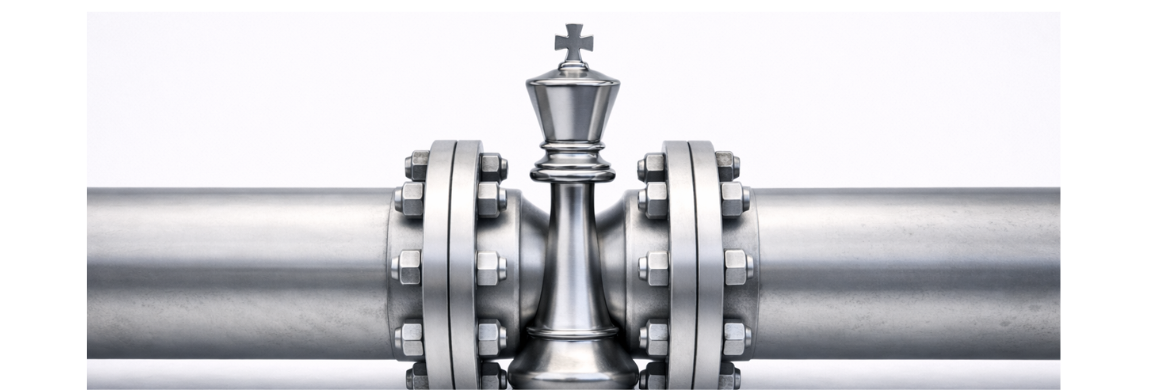
Ownership does not produce electrons.
Execution does.
The Incentive Trap
Asset ownership carries structural incentives.
Assets must be filled, utilized, and justified. When execution is tied to specific assets, market signals are filtered through those priorities. Routing, pricing, and planning begin to serve the asset before they serve the system.
This dynamic is well understood in natural gas markets.
Asset affiliated marketing distorts routing and pricing because infrastructure has internal needs. Molecules move to satisfy utilization requirements before they move to maximize value or efficiency. The result is not misconduct. It is math.
The same logic applies at grid scale when ownership is substituted for execution discipline.
Protection vs. Insulation
Utility ownership is being sold as stability and customer protection. In practice, it replaces exposure with insulation.
Risk does not disappear.
It is relocated from corporate balance sheets to captive ratepayers.
Costs become predictable not because the system is more efficient, but because they are guaranteed.
Markets impose discipline because capital is exposed. When execution is weak, markets signal scarcity through price. That signal is uncomfortable, but it is honest.
Planning systems remove that signal and replace it with forecast confidence. When forecasts miss, the customer still pays. Calling that protection does not change the outcome. It changes the politics.
The Transparency Gap
This debate is not about deregulation versus regulation. It is about where risk sits.
In markets, risk sits with the party making decisions.
In ownership driven systems, risk sits with customers who cannot opt out.
If a project only works when risk is transferred to ratepayers, the economics did not clear. That is not a market failure. It is a discipline failure.
When utilities own generation, performance data often becomes a proprietary black box. Markets require transparency to function. Monopolies require silos to survive.
Reliability cannot improve where transparency is reduced.
The Predetermined Outcome
Studies claiming multi billion dollar savings under utility ownership rely on selective modeling.
They rarely test execution reform. They assume the same interconnection delays, the same fuel assumptions, and the same settlement structures. They change the owner but leave execution broken.
The outcome is predetermined because the model ignores the root cause.
Reliability does not improve when execution failures are hidden behind rate base. It quietly deteriorates while costs harden into long term obligations.
Restoring Real Reliability
Reliability is not built by control.
It is built by forcing risk to sit where decisions are made.
The solution is not choosing between markets and utilities.
The solution is fixing the execution layer first.
Execution reform requires:
- Interconnection speed
Move from a first come model to a first ready posture. - Fuel certainty
Treat fuel as a primary delivery requirement, not a secondary assumption. - Performance enforcement
Penalize non delivery as a breach of contract, not a statistical variance. - Settlement discipline
Ensure those who cause the shortfall bear the cost of the cure.
If markets still fail after execution is repaired, ownership can be debated honestly.
Until then, expanding ownership is an admission that the system no longer trusts itself to operate under exposure.
The path forward is not hiding risk.
It is restoring the structure that makes reliability real.
The Framework of Execution:
The Flow Before Theory Series 👉 Read Now → https://aelix.net/flow-before-theory/
The Aelix Model Series 👉 Read Now → https://aelix.net/aelix-model-series/
The Market Order Series 👉 Read Now → https://aelix.net/market-order-series/